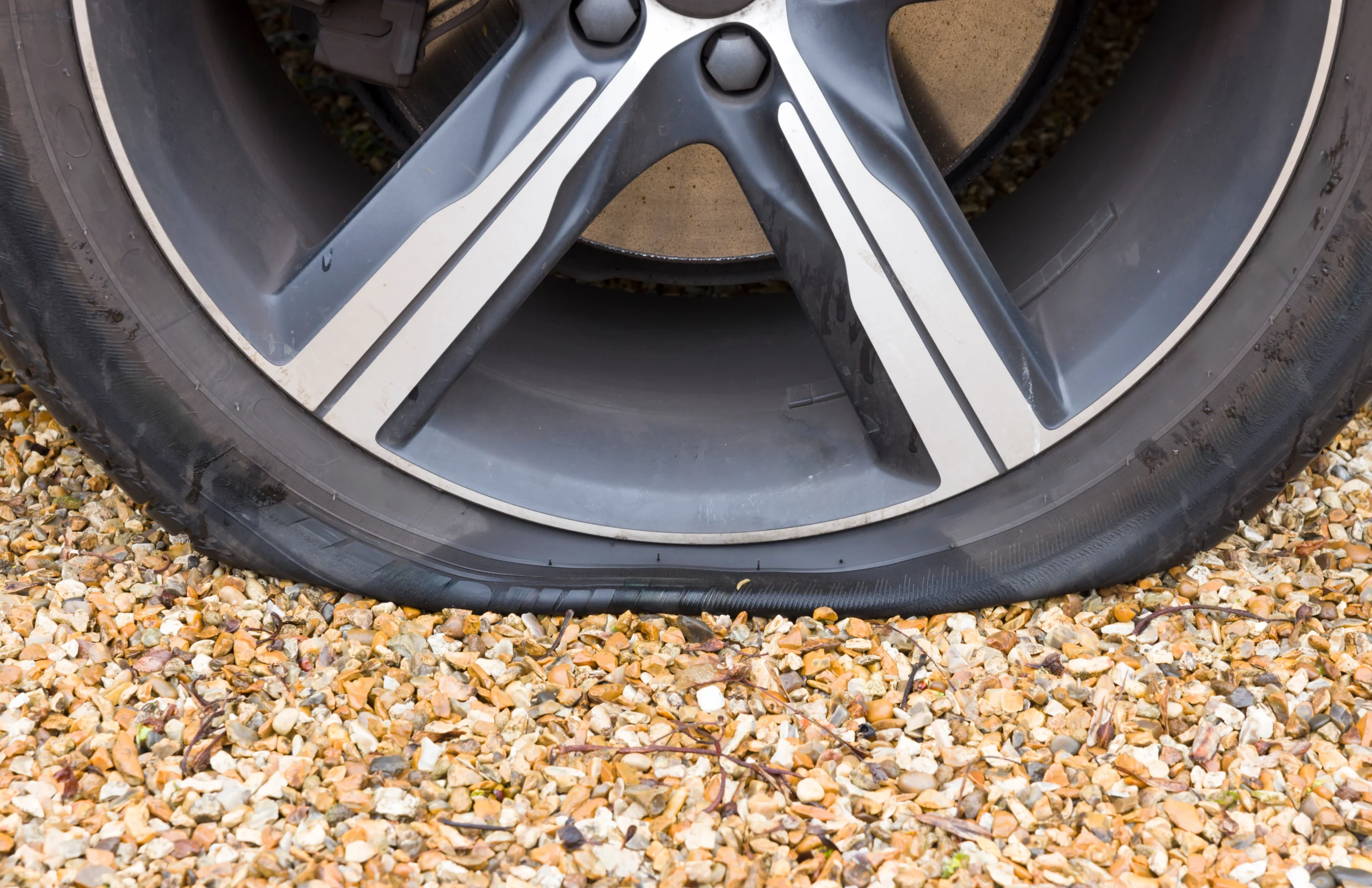
Why tyres go flat
Flat tyres can occur for a number of reasons, often with little warning. Common causes include:
- Sharp objects on the road such as nails, screws, glass and other debris, which can puncture the tyre and cause a slow or sudden loss of air pressure.
- Pothole and kerb impacts, which can damage the tyre or wheel, leading to cuts, weakened sidewalls or internal structural damage.
- Faulty valve stems, which can become cracked, loose or damaged over time, allowing air to escape gradually.
- Worn or ageing tyres, as deteriorating rubber and reduced tread depth make tyres more susceptible to punctures and other forms of damage.
- Incorrect tyre pressure, whether too high or too low, which can accelerate tyre wear, affect handling and increase the risk of punctures and impact damage.
It's important to remember that not all punctures cause an immediate flat tyre. In many cases, air escapes slowly over several days or weeks, making regular tyre pressure checks and visual inspections essential. Spotting a problem early can help prevent further damage, improve safety and reduce the likelihood of an unexpected breakdown.
Recognising the signs of a flat tyre
A flat tyre isn't always immediately obvious, particularly if the tyre is losing air slowly. However, there are several warning signs that can indicate a problem and should never be ignored. These include:
- Your vehicle may start pulling to one side, making it more difficult to maintain control.
- The steering may feel heavier than normal or slower to respond to your inputs.
- You may notice unusual vibrations through the steering wheel, seats or floor of the vehicle.
- A tyre pressure warning light may appear on the dashboard if your vehicle is fitted with a TPMS.
- The tyre may appear visibly deflated, or you may notice bulges, cuts or other signs of damage.
If you notice any of these symptoms, it's important to respond quickly rather than continuing your journey. Driving on a flat or underinflated tyre can cause further damage to the tyre, wheel and suspension, increase the risk of a blowout and compromise your safety on the road. Stopping safely and assessing the situation at the earliest opportunity can help prevent a minor issue from becoming a costly repair.
What to do immediately after a flat tyre
Experiencing a flat tyre can be unsettling, particularly if it happens while you're driving. Staying calm and following the following steps can help keep you safe and prevent further damage to your vehicle.
Move to a safe location
As soon as you suspect a flat tyre, reduce your speed gradually and maintain a firm grip on the steering wheel. Avoid harsh braking, sudden steering movements or sharp lane changes, as these can make the vehicle more difficult to control. Look for a safe place to stop, such as a lay-by, car park or the hard shoulder if you're on a motorway. Wherever possible, choose a location that is away from moving traffic and provides enough space to assess the situation safely.
Make yourself visible
Once you have stopped, switch on your hazard warning lights to alert other road users that your vehicle is stationary. If you have a high-visibility jacket available, put it on before exiting the vehicle. This can help ensure you remain visible, particularly in poor weather conditions or at night. Where appropriate and safe to do so, place a warning triangle behind your vehicle to provide additional warning to approaching traffic. However, warning triangles should never be used on motorways or where it would be unsafe to walk along the roadside.
Inspect the tyre
Carefully identify which tyre has lost pressure and carry out a visual inspection. Look for obvious signs of damage, such as nails, screws, cuts, bulges, or sidewall splits. When inspecting the tyre, always prioritise your safety. Avoid standing close to fast-moving traffic and never place yourself in a dangerous roadside position simply to examine the damage.
Decide on the next step
Before taking any further action, consider your surroundings, traffic conditions, and the equipment available to you. If you have a spare wheel, jack, and the knowledge to use them safely, a wheel change may be possible. However, if the location is unsafe, the damage appears severe or you are unsure how to proceed, it is usually best to contact a professional recovery or tyre service. Taking a few moments to assess the situation properly can help you make the safest decision and avoid unnecessary risks.
Can you drive on a flat tyre?
Driving on a flat tyre is never recommended, even for a short distance. A loss of tyre pressure can affect your vehicle's handling, steering, and braking performance, increasing the risk of losing control. Continuing to drive can also cause damage to the wheel and suspension, while a minor puncture may quickly develop into a complete tyre failure. In many cases, what could have been a simple repair becomes a much more expensive replacement. It's important to remember that even a short journey on a flat tyre can cause significant damage. If you suspect a tyre is completely flat, pull over as soon as it is safe to do so and arrange a repair or replacement before continuing your journey.
Understanding whether the tyre can be repaired
After a puncture, whether a tyre can be repaired depends on the location and extent of the damage. Repairs are usually possible if the puncture is small and located in the central tread area, the tyre has not suffered significant internal damage, and there is sufficient legal tread remaining. If the tyre is heavily worn, replacement may be the better option. It’s also important to remember that a puncture can only be repaired if it is under 6mm. If it is any larger than this, then you will need a full tyre replacement.
When does a tyre need replacing?
Some types of damage cannot be repaired safely. This includes:
- Sidewall punctures, as the sidewall flexes constantly during driving
- Large cuts, tears, or holes that weaken the tyre's structure
- Structural damage, such as exposed cords, bulges, or internal deterioration
- Tyres that have already undergone multiple repairs
In these situations, replacing the tyre is the safest and most reliable solution.
Why professional inspection is essential
It is not always possible to determine whether a tyre can be repaired simply by looking at it. Damage inside the tyre may not be visible from the outside, and what appears to be a minor puncture can sometimes conceal more serious structural issues. For this reason, a professional inspection is essential before any decision is made. A qualified technician can assess both the external and internal condition of the tyre and recommend the safest course of action.
When roadside tyre replacement is the safest option
Although some punctures can be repaired, there are many situations where a roadside tyre replacement is the safest and most reliable option. Knowing when a tyre is beyond repair can help drivers make the right decision and avoid unnecessary risks. A blowout is one of the clearest examples. The sudden loss of pressure often causes significant internal damage, meaning the tyre must be replaced before the vehicle can be driven safely again. Sidewall damage usually requires immediate replacement. Cuts, splits, and punctures in the sidewall cannot normally be repaired because this area flexes constantly while the vehicle is moving. Tyres that have become shredded due to a blowout or being driven while flat should also be replaced, as the damage is often too severe to restore safely. In some cases, road conditions make repairs unsafe. Busy roads, motorways, poor weather, and low visibility can all increase the risk of an accident, making professional assistance the safest option. A lack of equipment can also make roadside replacement necessary, particularly as many modern vehicles are no longer supplied with a spare wheel and some drivers may not carry a repair kit or the tools needed to change a tyre safely.
The benefits of professional roadside assistance
While it may be tempting to handle the issue yourself, professional roadside assistance offers several advantages. Trained technicians can assess the tyre, determine whether a replacement is needed and carry out the work safely using the correct equipment. Professional assistance also removes the risks of changing a tyre in hazardous conditions or close to moving traffic, allowing experienced specialists to complete the job safely and efficiently. Many roadside tyre services can provide replacement tyres on-site, helping to minimise delays and get you back on the road quickly.
Why mobile tyre fitting can save time and hassle
A flat tyre can quickly disrupt your day, whether you're travelling to work, running errands, or setting off on a long journey. Fortunately, mobile tyre fitting offers a convenient alternative to a traditional garage visit, helping drivers get back on the road with minimal disruption. Rather than arranging recovery or driving to a workshop, a qualified technician comes directly to your home, workplace, or roadside location with everything needed to inspect, repair or replace your tyre. One of the biggest advantages of mobile tyre fitting is that there is often no need for a recovery vehicle. If your tyre is unsafe to drive on, a technician can come to you, saving both time and the cost of vehicle recovery. The flexibility of mobile tyre services is another major benefit. Whether you're stranded at the roadside, parked at work, or at home on your driveway, assistance can be provided at a location that suits you. This removes the inconvenience of arranging transport or changing your plans to visit a garage. Mobile tyre fitting can also minimise disruption to your schedule. Instead of waiting at a workshop, you can carry on with your day while the work is completed, making the service particularly useful for busy professionals, families, and fleet operators. Despite the convenience, there is no compromise on quality. Professional technicians use specialist equipment to fit and balance tyres correctly, ensuring your vehicle remains safe, comfortable, and roadworthy.
How Axuro Wheels can help
At Axuro Wheels, we understand that tyre problems are never convenient. That's why we aim to make the process as straightforward as possible, providing a responsive service and expert advice whenever you need it. Whether you're dealing with an unexpected issue or simply need a trusted team to keep your vehicle in top condition, our experienced technicians are on hand to provide professional support and high-quality tyre solutions. With a focus on customer service and reliability, we are committed to helping drivers stay safe and keep moving with confidence. To learn more about our services or to arrange assistance, get in touch with our team today.