
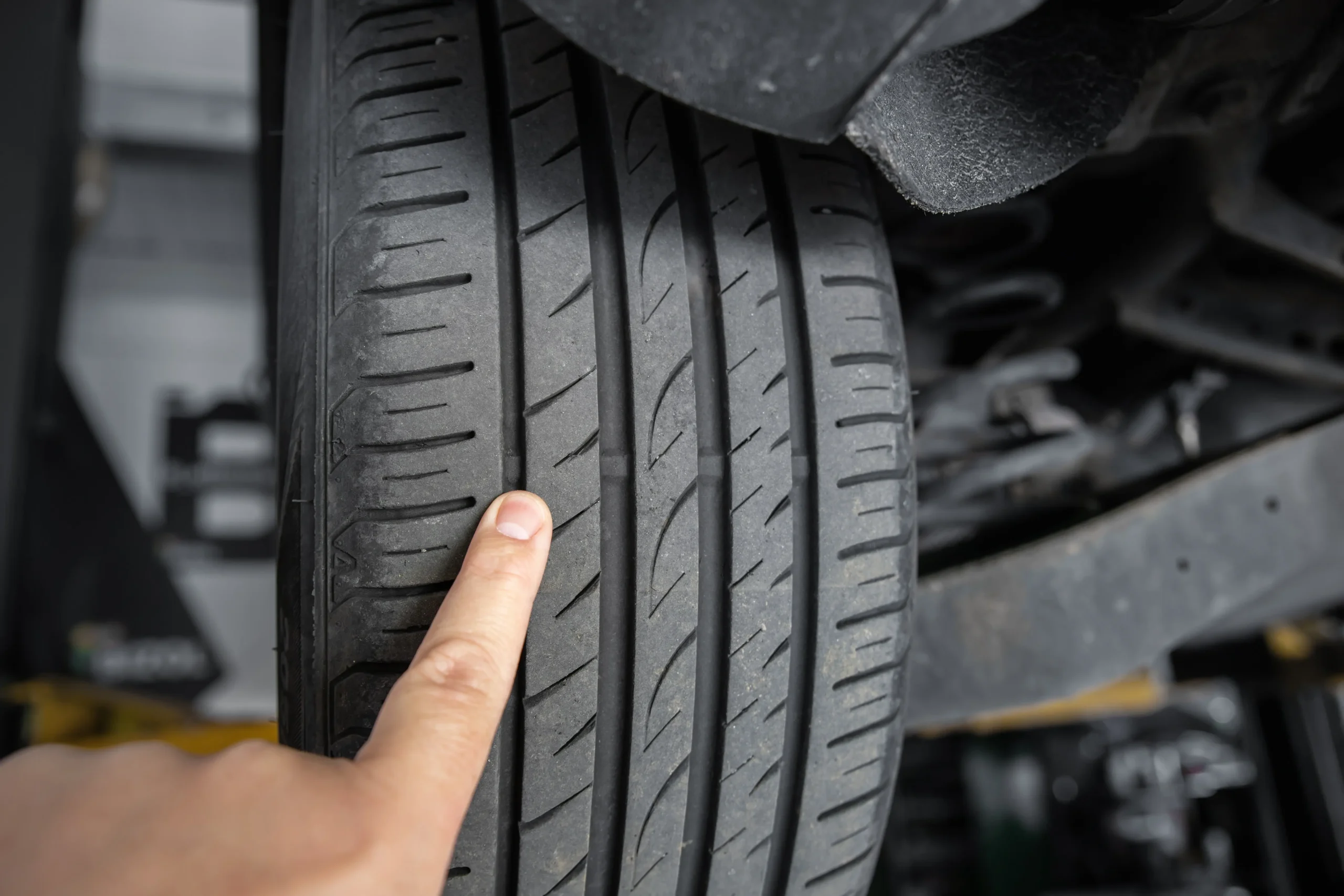
Your tyres are one of the most important parts of your vehicle when it comes to safety. As the only point of contact with the road, it's crucial that they're intact for effective stops, starts, and steering. Subtle changes in performance, grip, and physical condition can easily go unnoticed amidst the business of day-to-day journeys. What starts as minor wear can slowly develop into a significant safety hazard, increase your braking distances, or lead to an unexpected breakdown. In this guide, we break down why regular tyre checks matter and seven essential warning signs every driver should watch out for. Whether it’s a quick tread depth check at home or knowing when the time is right to call in a professional, here is everything you need to know to keep your vehicle legal and ready for the road.
Why checking your tyres matters
There are multiple ways that tyres can become damaged and worn, so it is best practice to check the condition and pressure of your tyres once a month as well as before any long journey to ensure best vehicle performance and maximum safety on the road. By checking this often, you can identify different problems caused by wear, ageing tyres, improper inflation, and hidden structural damage before they turn into costly repairs or dangerous driving hazards. Because tyres wear generally over time, you may not realise there's a problem until you need to suddenly brake but this is too late. That's why regular checks are crucial to a safe and smooth journey.
Seven signs you may need new tyres
With some issue being obvious at first glance, others can develop quietly in the background. Here are seven signs that there's a problem with your tyres that need professional attention.
1. Low tread depth
Low tyre tread depth is a normal occurrence. The more time your car spends on the road, the more the rubber compound rubs against the road and this friction is the cause of wearing tyres. This essentially means that your car has less grip on the road as your wheels get older. The minimum legal tread depth is 1.6mm across the central three-quarters of the tread width around the entire circumference. However, we recommend getting your tyres replaced as soon as they reach 3mm, as breaking distance on wet roads increases significantly when the tread depth goes below this threshold. DIY test While a tyre gauge will give you the most accurate reading on your tyres' tread depth, an effective way to check this yourself is the 20p coin:
- Take a 20p coin and insert it into the grooves of the central three-quarters of your tyre.
- If you can't see the outer band of the coin's design when it's in each groove, your tyres are safely above the 1.6mm limit.
- If you can see the outer band after inserting the coin, your tread depth is below the legal limit and will need replacing right away.
Annually, over six million tyres have illegal tread which is why it's so important to conduct regular checks and replace your tyres befor they compromise safety or result in legal penalties.
Cracks and cuts Tyre cracks and cuts can be caused by:
- UV exposure
- Ozone degradation
- Chemical exposure
- Curb scrapes
Driving on a wheel that's damaged in this way will weaken the tyre's internal structure. This can then cause a sudden, unexpected tyre blowout whilst you're on the road, resulting in the driver losing control of the vehicle. It's important to note that there is no safe length of time to drive on cracked tyres as once a split appears, the degradation process has begun and failure can occur at any point. While it isn't illegal to drive on small cuts and cracks, it is against the law to drive on tyres that have large splits. We recommend getting your tyres checked by a professional as soon as you notice this type of damage.
Bulges
Bulging is caused by:
- Incidents of impact while on the road such as hitting potholes, curbs, speed bumps, and debris
- Driving on under inflated tyres
- Exceeding your car's weight limit
A tyre bulge is a sign of the snapping or separating of a tyre's internal cords. This then allows air pressure to push the outer rubber outward. Again, you are at risk of a sudden blowout if you drive on tyres that are bulging. This is a structural defect that cannot be repaired, so the tyre must be replaced as soon as you noticed a bulge has formed.
3. Uneven wear
Uneven tyre wear highlights that there may be a problem with your car's inflation pressure or suspension components. This wear can show in multiple different areas of your tyre making it an essential point to check during routine maintenance.
Wearing on the outside
Wearing on the edges of a tyre is an indication of underinflation and will make the wheel look rounded rather than flat. When a tyre lacks sufficient air pressure, the weight of the vehicle is pushed to the outer shoulders, causing the sides to wear down much faster than the middle.
Centre wear
Tyre wear on the centre of the wheel is a sign of over-inflation. If the tyre is over-inflated, then the central part of the tread will be supporting most of the load, meaning it bulges outward slightly and wears away much quicker than the edges that remain relatively untouched.
Tyre wear on only the inside or outside of the tyre
Uneven or patchy wear patterns can indicate a problem with a vehicle's suspension. When tracking or wheel alignment is knocked out of specification, often from hitting curbs or potholes, the tyre rolls at an angle rather than lying flat against the road.
4. Repeated loss of pressure
A hidden slow puncture, leaking valve stem, or rim edge bead corrosion are all common causes of repeated loss of tyre pressure. If you are constantly topping up your tyre pressure, only for it to drop after a few days or weeks, your wheel may be dealing with one of these issues and will need a replacement swiftly. Continuing to top up your tyres or driving on a flat tyre is not a safe way to drive as running on low pressure causes severe internal heat buildup and carcass strain. This increases the risk of a sudden blowout. If you find yourself repeatedly topping up the air in the same wheel, have a tyre professional inspect it right away.
5. Vibrations
Experiencing vibrations in your steering wheel while driving usually means that a part of your front tyres or tyre suspension is worn out. These vibrations tend to happen at speeds of 50 - 70 mph and can gradually worsen as your speed increases. This can be caused by a number of issues with your car, not necessarily just the tyres. Steering wheel imbalance and lost wheel weights can easily disrupt the smooth rotation of your tyres, while uneven tread wear or an internal structural flaw in the tyre itself can also trigger shaking. It's best to organise a professional inspection if you're experiencing this kind of issue with your car. Balancing your wheels or aligning your steering may quickly resolve the issue, but if the vibration is caused by internal carcass damage or severe tread flat-spots, replacing the tyre will be essential for your safety.
6. Changes in handling
If your car is pulling slightly to one side on a flat road or if your steering wheel is responding sluggishly, this may be an indication that the condition of your tyres has worsened. A change in the way your vehicle feels when driving usually means that your tyres are no longer providing equal grip, support, or responsiveness across all four corners. This is commonly caused by the rubber compound of your tyres losing flexibility, tread depth being worn down unevenly, or low pressure altering the tyre geometry. Driving in a vehicle that suddenly feels different means your vehicle has become unpredictable. As expected, this can lead to accidents on the road so getting your tyres and wheel alignment checked promptly is key.
7. Ageing tyres
Even if your tyre has plenty of tread left, time will naturally harden and dry out the rubber compound over time, reducing general grip and increasing cracking risk. To check the any of your tyre, look for the four-digit Department of Transportation (DOT) code on the sidewall. For example, if the code is 3324, the tyre was manufactured in the 33rd week of 2024. If your tyres are over five years old, we recommend getting them checked by a professional once a year in between DIY checks conducted by yourself. Once your tyres reach 10 years, it's best to get them replaced regardless of tread.
What to do if you spot tyre wear or damage
Knowing when to consult a professional about a suspected tyre issue can be tricky, particularly as certain symptoms like wheel vibration or uneven wear can be caused by other parts of your car. If you arrive home after a journey that didn't feel quite right, or you want to stay completely on top of your car maintenance, here's what you can do to safely check your tyres and determine whether a professional is needed:
- Check your tyre pressure on a monthly basis using a pressure gauge.
- Check tyre tread depth as well with a gauge or the handy DIY way to make sure, you're above the legal limit.
- Inspect your tyres' sidewalls also with a torch or in good lighting for a full picture of their physical condition and integrity.
Prioritising safety
Severe damage including sidewall bulges, exposed internal cords, or low tread depth present immediate danger to you and others on the road. It is important not to drive long distances or at high speeds while your tyres are in this condition.
Getting replacement tyres with Axuro Wheels
With tyre-related issues causing 58,000 breakdowns on motorways in 2025, it's clear why keeping your wheels in good condition is essential for a safe and legal journey. Not every problem means an instant replacement. Often a quick realignment check or pressure top-up is all that's needed, but in cases of serious wear and damage, swift action is vital. In the case of damage that needs a quick repair, don't risk it getting worse on the road. Our mobile fitting service brings expert assistance straight to you at home, work, or out on the roadside to support your safety on the road. Get in touch with our team today to book a mobile tyre fitting or to get expert advice on your tyres.
Back to blog